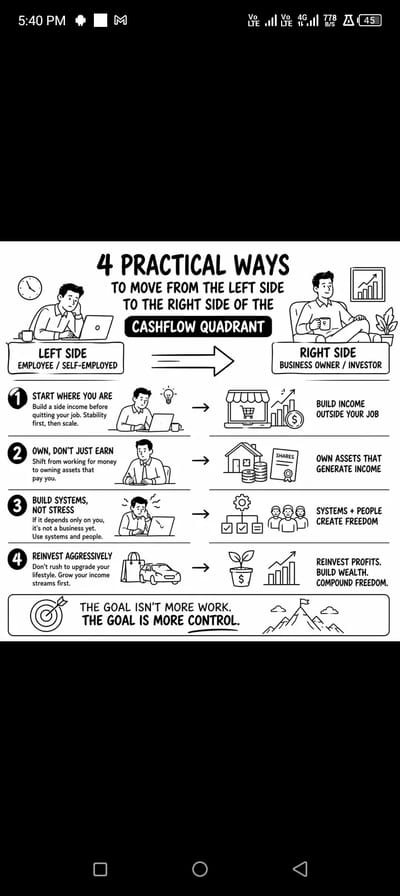
Self explanatory
Read MoreHusborn Kenyanya
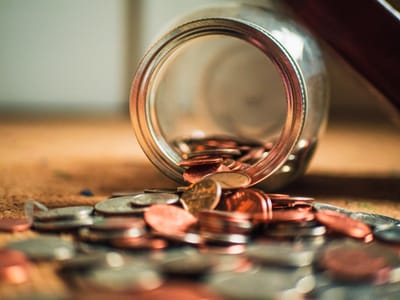
There are a bunch of reasons why people choose to start a side hustle, and it’s not always just about the money. While extra cash is great, side hustles can also help you build skills, explore passions, and open doors to new opportunities you never knew existed. Paying off debt Paying off a debt can feel overwhelming, especially if it’s a hefty one. Between repayments, personal loans, chipping away at the mortgage and managing credit-card repayments, it can be difficult to make ends meet and still have cash left over for everything else. Starting a side hustle helps ease the pressure by contributing extra earnings towards repayments. Saving for something special Whatever you’ve got your sights set on, additional funds generated from a side hustle can help make those more indulgent spends far more doable and easier to justify when you check your bank account balance. Preparing for the unexpected Car accidents. Broken washing machines. A freak injury at training. When something goes wrong, the last thing you need to worry about is how to cover the cost. A side hustle can bring in extra money that you can bucket into an emergency expenses account so that when the unexpected happens, you’re well prepared. Feeling empowered Money aside, there’s the feeling of accomplishment for a job well done, especially if you end up starting a new small business that actually takes off! Using your skills to serve others – whether it’s cleaning kitchens or building websites for small business owners – can be both personally rewarding and quite lucrative
Read More
Assets put money in your pocket I really like how Robert Kiyosaki defined an asset and a liability in his "Rich Dad, Poor Dad" series of books. He says that assets are something that put money in your pocket, whereas liabilities take money out of your pocket. Robert was scrutinized when he said that a person's own house is not an asset because it costs money to keep it. I tend to agree with Robert. Yes, a house should increase in value, but so do all the other properties around. It should simply keep up with the property market. Someone might get lucky and buy low in a suburb that outperforms the rest of the suburbs around them, state or even country, but that's rare. I was talking to someone recently who bought a rental property last year. They were breaking even at the time of purchase, meaning their rental income covered the mortgage. But with the increase in rate hikes, they now must chip in their own money to keep up with the additional payments. The rental property has become a liability for now and maybe forever if the money cannot be recouped when things turn around, rent increases, or the property sells at a profit. I love how Robert's book discusses how you make your money when buying a rental property. That means that rental property purchases should generate positive cashflow in an up or down market. He looks at 100 properties just to buy one, so it goes to show sometimes you must hunt for a good deal. Negative gearing is a word I used to think was good. And maybe it was or maybe it still is for some. I'm not totally sure. But getting a tax break on money I am losing doesn't sound like a great plan. If I pay 40% in tax and my rental property has a negative return of $1,000 yearly, I get a $400 tax deduction, but I still must fork out the $600. Think about it this way. How many rental properties can you own if they all lose money versus them all making money? The latter is a much better place to be in, and is making you richer, not poorer. Now I'm not suggesting people go out and sell their negatively geared rental properties. This is all about education and hopefully, it provides something to think about, especially regarding future purchases or decisions. I know for me; this understanding has changed how I look at a property.
Read More